Art’s Impact on Public Spaces and Developments
Breathed Into Stone: Why True Developments Must Begin With Art
When we think about modern property developments or urban precincts, the mind often defaults to a checklist of raw utilities: square footage, glass facades, high-speed fiber, and structural integrity. We construct towering monuments of brick, steel, and mortar.
But a building is just a shell until it connects with the human spirit. Without soul, a public square is just empty pavement; a corporate park is just an island of concrete.
To transform these spaces from places where people merely pass through into destinations where they want to be, we have to introduce a human element. For me, that element has always been sculpture.
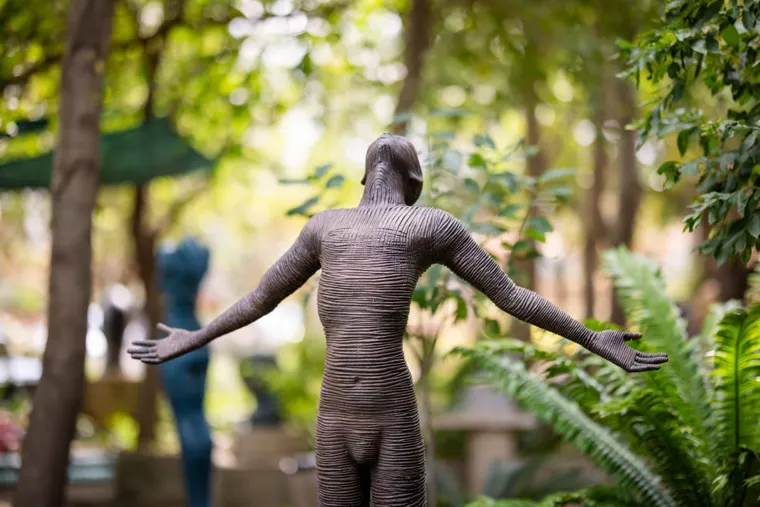
“The human form is the crown of creation – the most beautiful form on Earth. By bringing it into the public square, we bridge the gap between heavy architecture and the soft, complex depths of the human psyche.”
Moving Art Outside the Gallery Walls
There is a traditional, unspoken rule that fine art belongs behind the pristine, quiet glass of a gallery. I have never agreed with that. Confining art to closed rooms inherently limits who can interact with it.
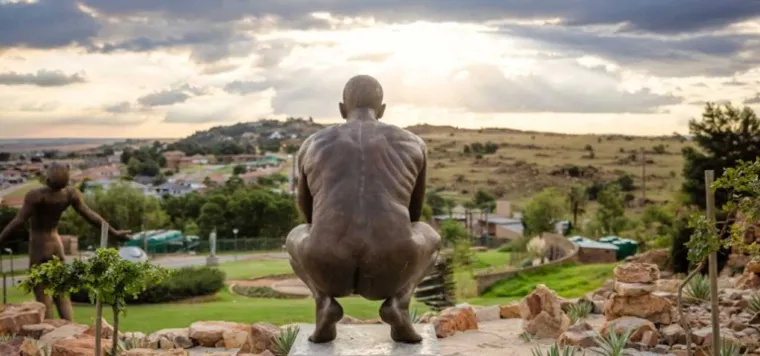
When a sculpture is placed out in the wild – adorning a busy traffic circle, standing guard on a pavement, or juxtaposed against a sharp, modern building facade – it becomes a living part of the community’s daily life. It forces a pause. It gives people something to look at, gather around, and return to.
We’ve seen this transformation firsthand across spectacular communal spaces globally and locally, from Leonardslee Lakes and Gardens in England and Genk in Belgium, to Menlyn Maine in Pretoria and Nelson Mandela Square in Johannesburg. In these environments, the art acts as a cultural anchor, shifting the energy of the entire precinct.
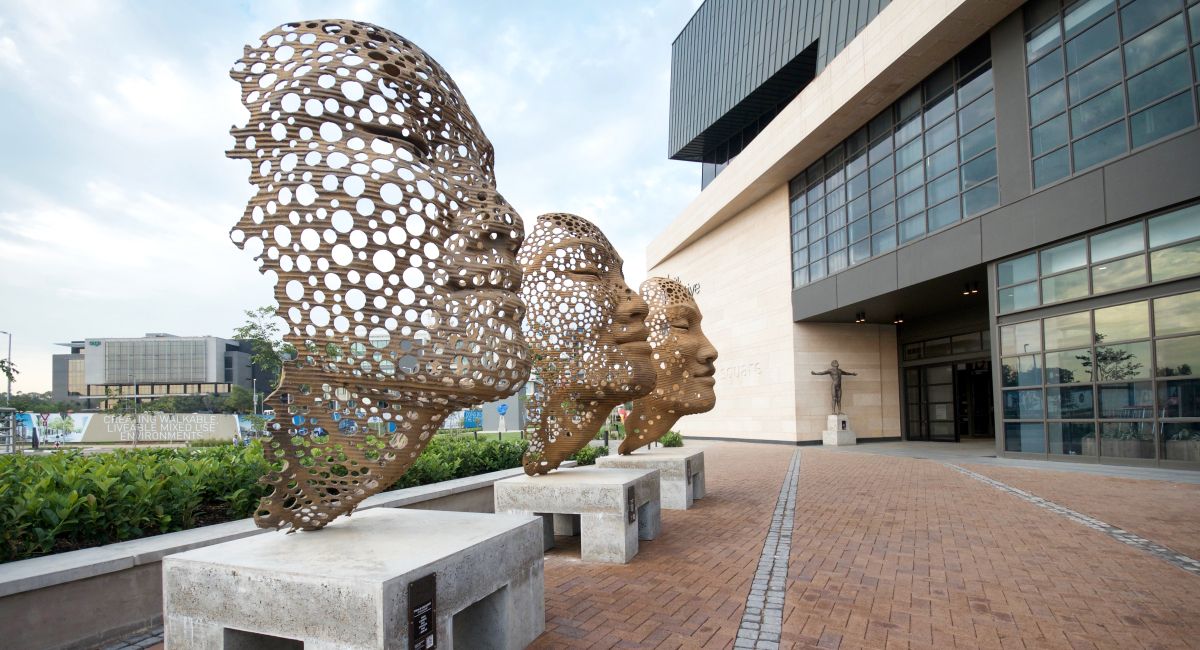
Central Square – Menlyn Maine
Case in Point: Landscape of the Soul at Century City
A recent project that truly speaks to this philosophy is an installation under a main road bridge in Century City, Cape Town – a traditionally utilitarian space called the Subway.
Working on this 33-meter-long concrete wall, we installed 500 mask-like faces against a striking, vibrant blue backdrop. We titled it Landscape of the Soul.
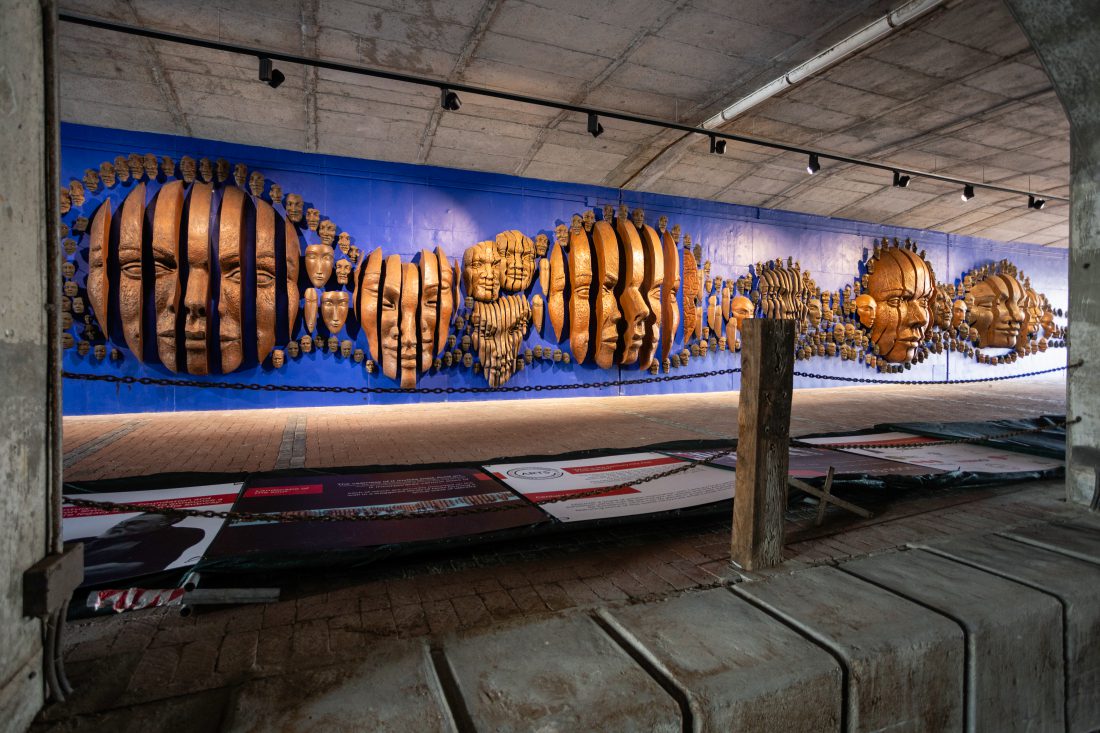
The Subway Precinct, Century City
│
├── Utilitarian concrete underpass transformed into an outdoor gallery
├── 33-meter installation featuring 500 hand-cast resin masks
└── Motion-activated auditory experience (5 unique 1-minute scores)
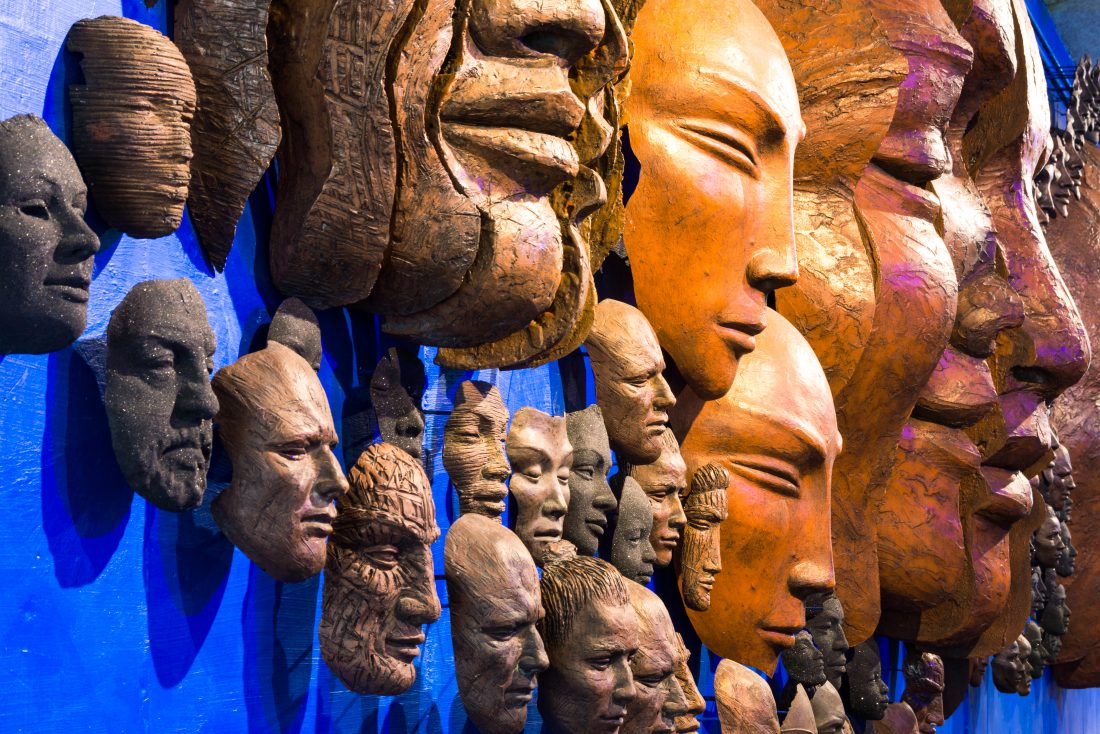
Instead of a dark, cold underpass, commuters are now greeted by a sea of diverse faces representing the collective human condition. To deepen the experience, we collaborated with the Cape Town Music Academy and composer Graeme Lees to introduce a sensory layer: motion sensors trigger one of five hauntingly beautiful one-minute musical scores as you walk past.
By layering sight, space, and sound, a generic concrete thoroughfare became an emotional landmark.
The Developer’s Dilemma: Rethinking the Art Budget
Over decades of working with brilliant developers like Rabie Property Group, Liberty Two Degrees, and Old Mutual, I have noticed a recurring challenge: the art budget is almost always the last consideration. When a massive project faces rising construction costs, the creative soul of the development is often the first thing to be scaled back.
To solve this, we developed a highly successful, innovative collaboration model: sculpture rentals.
Instead of requiring an enormous upfront capital expenditure to purchase monumental public art, developments can rent curated collections of sculptures for an accessible monthly fee. This allows property owners and corporate precincts to:
- Breathe immediate life into new developments.
- Rotate exhibits periodically to keep the space dynamic, fresh, and engaging for regular visitors.
- Create highly Instagrammable, culturally significant spaces that naturally drive foot traffic and elevate property value.
Evolving Cities into Cultural Hubs
Art is not a decorative afterthought or a luxury item to be checked off if there is leftover budget. It is an essential driver of how public spaces are experienced.
As we look toward the future of urban architecture, our goal shouldn’t just be to build bigger or higher. Our goal must be to build spaces that reflect our collective humanity, ignite conversation, and turn our daily commutes into moments of inspiration. Let’s stop building empty shells, and start shaping spaces with soul!